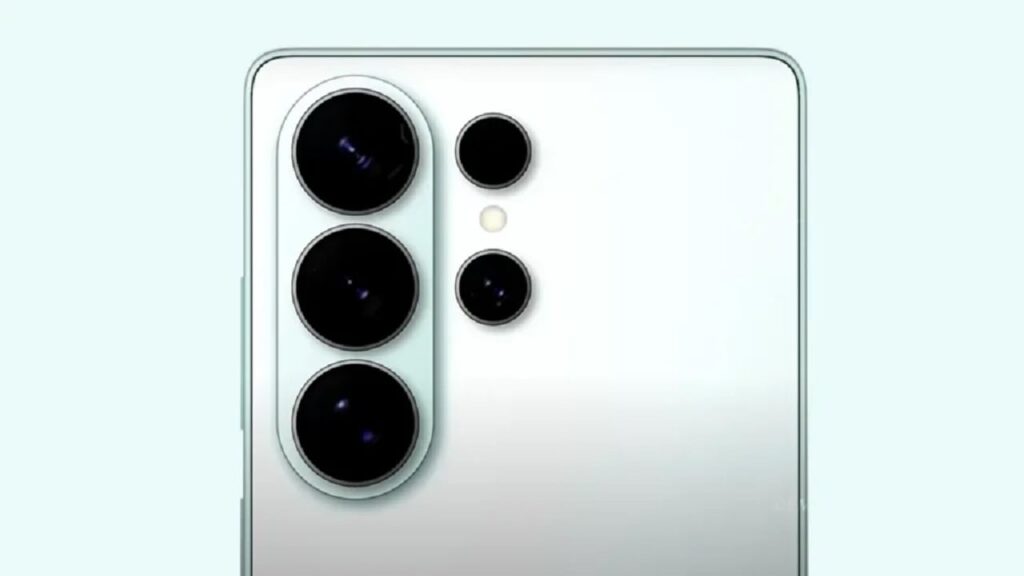
Let’s be real for a second. Every year, Samsung drops a new Ultra, and every year the internet loses its mind — half the people saying it’s a revolutionary leap forward, and the other half pointing out that it looks suspiciously identical to last year’s model. So where does the Galaxy S26 Ultra actually land?
I’ve spent time digging into the specs, the real-world reviews, and the benchmark data so you don’t have to wade through seventeen YouTube videos to figure it out. Whether you’re coming from an S24 Ultra, jumping ship from iPhone, or just trying to decide if the $1,299 price tag is justifiable — this review is for you.
Design: Familiar Face, Smarter Choices
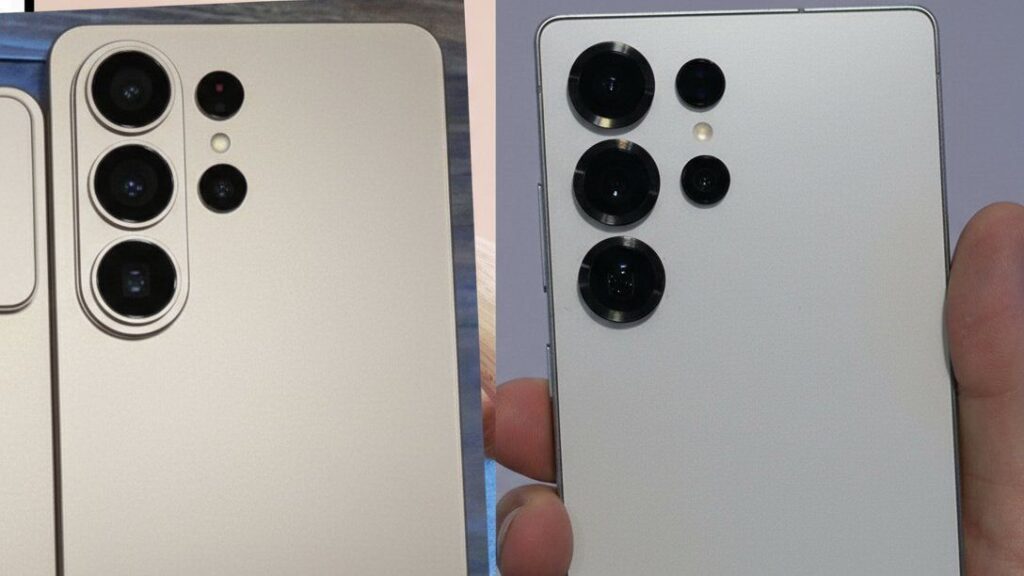
If you picked up the Galaxy S26 Ultra and thought it looked almost exactly like the S25 Ultra — you’re not wrong. Samsung hasn’t dramatically reinvented the wheel here, and honestly, that’s not the criticism some people are making it out to be. What they have done is make some calculated, deliberate changes that actually improve the experience.
The most noticeable shift is the corners. The corners are now more rounded than before, making the S26 Ultra line up nicely with the rest of the Galaxy S lineup instead of standing out as its own distinctly boxy thing. It sounds minor, but once you hold it, you feel the difference. The rounded corners make the phone feel a whole lot more comfortable in the hand — enough that reviewers found themselves reaching for it over other flagships they were carrying.
Samsung shaved a few grams off its total weight and a few millimeters off its thickness, landing at 7.9mm and 214 grams compared to last year’s 8.2mm and 218 grams. Engadget In isolation that sounds trivial, but when you’re holding a phone for hours a day, every gram is a conversation you eventually have with your wrist.
The Titanium Situation — Samsung Made the Right Call
Here’s something the internet has been complaining about that I actually think deserves a more nuanced take: Samsung ditched the titanium frame and went back to Armor Aluminium.
It follows the pattern of Apple’s Pro-level iPhones, which have also recently reverted to aluminium, and it makes practical sense — aluminium is the superior material for thermal performance, since titanium can get a little too hot and cause throttling. Switching back to Armor Aluminium also meant Samsung could offset the higher cost of RAM and flash storage, which is part of why the Galaxy S26 Ultra did not get a price increase this year.
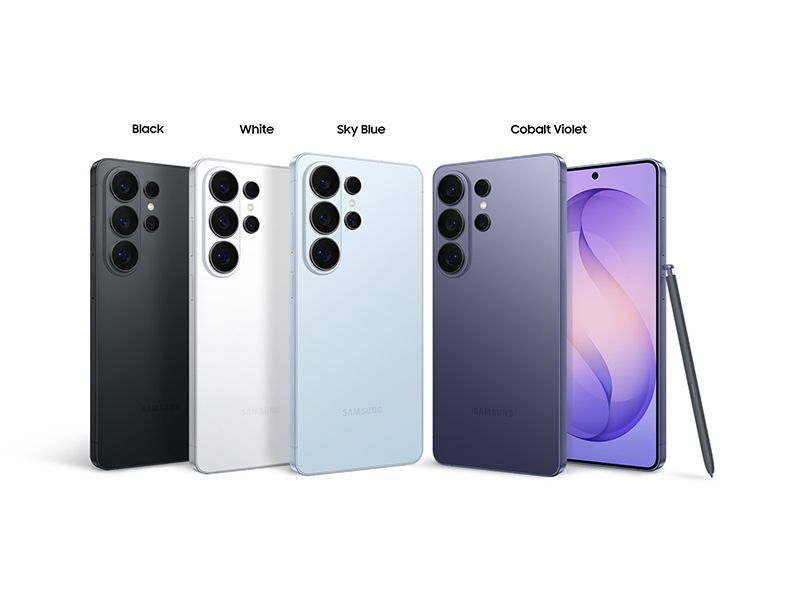
So yes, the “downgrade” in material is actually a smart systems-level decision. The phone doesn’t feel cheap. It comes in White, Black, Cobalt, Violet, and Sky Blue — and frankly, it looks great in all of them.
Display: The Privacy Feature Nobody Saw Coming
The screen itself — a 6.9-inch panel — carries the same core specs as before. But Samsung pulled off something genuinely interesting here that’s worth discussing at length, because it’s not a gimmick.
The Privacy Display is a world-first built-in feature that can hide the whole screen, or just elements of it, from prying eyes — think public transport, airport lounges, open-plan offices. This isn’t a third-party screen protector or a software trick. It’s hardware-level, and it works. The Galaxy S26 Ultra is the best Android phone yet with a truly innovative and useful Privacy Display, Tom’s Guide says.
If you’ve ever instinctively tilted your phone away from someone sitting next to you on the subway, you’ll immediately understand the value here. Samsung finally turned that impulse into a feature.
It’s worth noting though that some brightness measurements from independent sources suggest the display may be slightly dimmer than the S25 Ultra — something to keep in mind if you frequently use your phone under direct sunlight. It’s not a dealbreaker, but it’s a real trade-off worth knowing about.
Performance: The Snapdragon 8 Elite Gen 5 Is a Beast
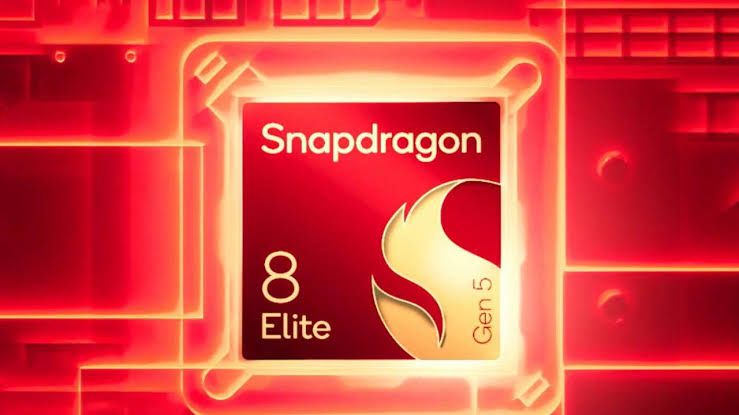
This is where things get interesting from a pure numbers perspective. The S26 Ultra is powered by Qualcomm’s Snapdragon 8 Elite Gen 5 chip for Galaxy, paired with 12GB of RAM on the 256GB and 512GB models, and 16GB of RAM on the top-end 1TB option.
The headline here isn’t just raw speed — it’s what’s happening under the hood with AI processing. The chip’s biggest strength lies in its improved NPU, which is 39 percent more powerful than the previous generation, paving the way for improved AI-based features. The CPU delivers around 19 percent better performance while the GPU is approximately 24 percent more capable.
In benchmarks, the multi-core CPU score in Geekbench 6 came in at 11,240, up from 9,828 on the S25 Ultra, while the GPU score hit 25,403, up from 19,863. These aren’t marginal gains — this is a meaningful generational step in performance.
What That Actually Means in Day-to-Day Use
The phone is fast. Unreservedly, unambiguously fast. Apps open instantly, scrolling feels as fluid as you’d expect from a high-end phone, and shots from the camera are captured instantly. But the more relevant performance story for 2026 is AI — and that’s where the improved NPU earns its keep.
Samsung has introduced promising agentic AI features like Now Nudge , which goes beyond simple shortcuts to actually anticipate your needs and suggest actions before you think to ask for them. It’s early days for this kind of functionality, but the foundation being built here is genuinely exciting if you’re the type of person who likes thinking about where technology is headed.
Camera System: Evolution, Not Revolution — But Still Impressive
Here’s where things get a little nuanced, and where your patience for complexity will be rewarded. The S26 Ultra’s camera setup doesn’t feature brand new sensors — Samsung kept the same hardware base — but made targeted improvements that add up to a noticeably better shooting experience in several key scenarios.
Main Camera: Low-Light Is the Real Story
The camera now produces better footage when shooting at night or in low light, thanks to a combination of the wider aperture and improved signal processing, resulting in brighter video with less noise.
In practical testing, in a challenging backlit shot, the S26 Ultra did a better job of exposing a subject’s face compared to the Pixel 10 Pro. Even without new sensors, Samsung has managed to make an already great main camera just a bit better.
Samsung also appears to have addressed color accuracy issues that plagued the S25 Ultra, which sometimes produced unnatural skin tones. With the S26 Ultra, face brightness in portraits is more flattering and consistent across lighting conditions.
Zoom: Still Among the Best, But the Competition Is Catching Up
Thanks to its dual telephoto system, the S26 Ultra delivers strong results across many zoom levels in both photo and video. In many situations, it still preserves slightly more detail than the iPhone 17 Pro. However, competitors are quickly closing the gap — Motorola’s Signature flagship, for example, performs particularly well in medium-range telephoto portraits around 3x zoom, where it preserves more facial texture and detail.
This isn’t a panic situation for Samsung fans. The S26 Ultra’s zoom is still world-class. But it’s worth being clear-eyed about the fact that Samsung’s camera advantage — which once felt untouchable — is now a competitive race rather than a foregone conclusion.
Video: Horizon Lock Is Genuinely Impressive
Building on Samsung’s Super Steady mode, Horizon Lock is a clickable option in the camera menu that locks the horizon no matter how you hold the camera. In side-by-side testing against the iPhone 17 Pro Max, no matter how much the phone was flipped around, footage remained smooth and stable while walking — the contrast with the iPhone’s footage was stark.
For content creators, there’s also APV and LOG video recording support, which puts the S26 Ultra squarely in serious creator territory. This isn’t just a phone for people who want nice Instagram shots — it’s a device that can hold its own in semi-professional video workflows.
Battery Life: Solid, But Not Groundbreaking
The Galaxy S26 Ultra features a 5,000mAh battery, the same size as the previous model, meaning it’s largely relying on power efficiency gains from its new chip for improved longevity.
The good news is that those efficiency gains are real. Battery life is excellent for the size, easily lasting a full day of heavy use including 5G roaming and GPS. The frustrating news — for those who’ve been waiting for it — is that Samsung still hasn’t made the jump to silicon-carbon battery technology. That’s a notable omission when you look at competitors who are pushing past 6,000mAh with lighter, more energy-dense cells.
Charging: Finally a Meaningful Upgrade
This is one of the clearest wins of the S26 Ultra. The S26 Ultra can now charge at up to 60W, delivering a 75% charge in 30 minutes according to Samsung. It uses standard USB-C PD PPS with no proprietary nonsense — which means your existing cables and chargers may already be compatible. For anyone who’s been frustrated by Samsung’s historically conservative charging speeds, this upgrade is a genuine quality-of-life improvement.
Software and AI: A Lot to Process
One of the more polarizing aspects of the S26 Ultra is the sheer volume of AI features Samsung has packed into One UI. There might be too many AI options on board — and that’s a fair criticism if you’re someone who values a clean, minimal interface.
That said, the features that matter are genuinely useful. With seven years of software support, you’re not just buying the phone for what it is today — you’re buying it for what it’ll be in 2031. That kind of long-term commitment to updates is something Samsung deserves real credit for, and it’s a differentiator that often gets glossed over in spec-focused reviews.
S Pen: Unchanged, Which Is Fine
The S Pen is essentially a carbon copy of what came with last year’s model, without any functional changes. One small quirk worth knowing: because the phone’s corners are more rounded than ever, there’s now a right and wrong way to insert the stylus. It will always stay put regardless, but if you don’t align the curve on the end with the phone’s corner shape, it just doesn’t look right.
If S Pen functionality was a major reason you were considering the S26 Ultra, know that you’re getting the same proven experience as before — solid, useful, and still unmatched in the Android world. Just no new tricks.
Pricing: Is $1,299 Justifiable?
The Galaxy S26 Ultra starts at $1,299 / £1,279 / AU$2,199. You can upgrade to 512GB for $1,499 or 1TB for $1,799. Samsung also offers up to $900 off with an instant trade-in credit.
If you’re upgrading from an S24 Ultra or earlier, the math starts to make sense — especially with aggressive trade-in values. If you’re on an S25 Ultra, the upgrade is harder to justify unless the Privacy Display or Horizon Lock specifically solve a problem you have.
The fact that Samsung didn’t raise the price this year, in a market where everything else has gotten more expensive, is worth acknowledging. It shows a level of restraint that suggests Samsung understands the value conversation they’re in.
Final Verdict: The Best Android Phone Right Now, With Caveats
The Samsung Galaxy S26 Ultra is a textbook example of intelligent iteration. It doesn’t have a single feature that makes you gasp and immediately call someone. What it has is a collection of thoughtful, well-executed improvements — a lighter build, faster charging, a genuinely innovative Privacy Display, better low-light video, and the fastest Android chip available — that collectively make it a more capable and more pleasant device than its predecessor.
It’s subtly one of the best Ultra phones Samsung has released in the past half-decade. The competition is closing in on cameras, the battery situation still isn’t perfect, and some users will find the AI feature overload exhausting. But if you want the most complete, most refined Android experience available in early 2026, the S26 Ultra is the one to beat.
Is it worth $1,299? If you’re on older hardware, almost certainly yes. If you’re on an S25 Ultra, probably not. If you’re switching from iPhone and tired of the walled garden — this is the most compelling argument to make the jump that Samsung has ever built.