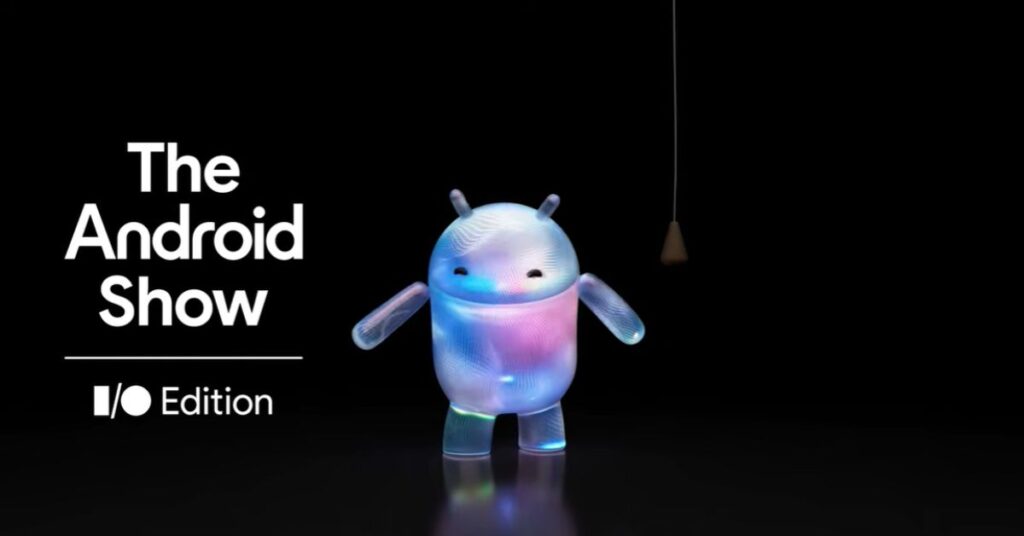
Google just held its Android Show: I/O Edition 2026, and this year’s event was heavily focused on AI, smarter devices, and making Android feel more connected across phones, laptops, cars, and even browsers.
The biggest theme of the event was simple: Google wants Android to become an “intelligence system” powered by Gemini AI. Instead of just opening apps yourself, Android is slowly becoming something that can understand what you want and help do tasks for you automatically.
Gemini Intelligence is now the center of Android
The biggest announcement was something called “Gemini Intelligence.”
Google is basically upgrading Android with deeper AI features that can understand context, automate tasks, and interact across apps. Instead of AI only answering questions, it can now help complete actions.
For example, Gemini can:
- Read information from emails or notes
- Open apps for you
- Add products to carts
- Fill forms automatically
- Create widgets using voice commands
- Understand what’s happening on your screen
Google says this will first launch on devices like the Pixel 10 and Galaxy S26 later this year.
Googlebook was officially announced
One of the biggest surprises was the launch of “Googlebook.”
This is Google’s new laptop category that combines Android, ChromeOS, and Gemini AI together. Think of it as Google trying to fully reinvent laptops for the AI era.
Googlebooks will:
- Run Android apps
- Use Chrome for web browsing
- Connect deeply with Android phones
- Include Gemini AI everywhere
- Feature something called “Magic Pointer,” which gives AI suggestions based on where your cursor is
Google confirmed that companies like Acer, ASUS, Dell, HP, and Lenovo will make Googlebooks.
Android 17 is getting smarter
Android 17 got a lot of upgrades.
Some of the new features include:
- Better multitasking
- Floating app windows
- Smarter notifications
- New AI-powered widgets
- Improved voice-to-text
- Better creator tools
- Stronger security protections
Google is also redesigning Android Auto and improving the visual style of Android overall.
Quick Share is becoming more useful
Google is expanding Quick Share so it works better across more devices and brands.
Brands confirmed to support the upgraded sharing system include:
- Samsung
- Xiaomi
- OPPO
- OnePlus
- Vivo
- Honor
Android users can also generate QR codes to share files with iPhones more easily. WhatsApp integration is also coming.
Switching from iPhone to Android is getting easier
Google and Apple surprisingly worked together to improve switching from iPhone to Android.
Users will now be able to transfer:
- Passwords
- Photos
- Contacts
- Messages
- Apps
- Home screen layouts
- eSIM information
And it all happens wirelessly.
Gemini is coming to Chrome on Android
Google is bringing Gemini directly into Chrome on Android phones.
This means the browser can:
- Summarize webpages
- Help with browsing tasks
- Edit images
- Understand context from your Google apps
- Automatically complete repetitive tasks online
Google calls some of these features “auto browse.”
Android security got major upgrades
Google announced several new security tools for Android 17.
Some of the biggest ones include:
- Scam call detection for fake bank calls
- Better malware detection
- Improved theft protection
- Biometric locking for lost devices
- APK scanning in Chrome
Google says Android will now be much more aggressive in stopping scams and suspicious apps.
New creator tools are coming
Google is clearly trying to attract creators and content makers.
New features include:
- Built-in reaction video recording
- Better Instagram support on Android
- Ultra HDR support
- Video stabilization
- Adobe Premiere on Android
- AI editing tools
Instagram’s tablet app is also finally getting better optimization for Android tablets.
Android Auto is getting redesigned
Cars with Android Auto are getting a fresh new look.
Google announced:
- New widgets
- Edge-to-edge Google Maps
- Better navigation design
- More customizable layouts
- Better support for different car screen shapes
Gemini AI is also coming deeper into the car experience.
Pause Point wants people to use phones less
One interesting feature announced was “Pause Point.”
When you open distracting apps, Android can now pause you for a few seconds and encourage healthier phone habits.
You can:
- Take a short breathing break
- Set app timers
- Redirect yourself to another activity
Google says this is designed to reduce screen addiction.
Final thoughts
This year’s Android Show felt less like a normal Android update and more like Google preparing for an AI-first future.
The biggest message was clear: Google wants Gemini AI to become the brain behind everything — phones, laptops, browsers, cars, and wearables.
The launch of Googlebook was probably the most surprising moment, but Gemini Intelligence is the real center of everything Google is building next.
Android is slowly changing from an operating system you control manually into one that actively helps you do things automatically.